How to Choose the Best AI Task Automation Tools for Workflow Automation
You are comparing AI task automation tools, but most reviews blur the line between marketing and real workflow fit. That ambiguity costs teams hours of setup time and subscription fees for tools that never match how they actually operate.
By the end of this article, you will have concrete criteria for evaluating core automation accuracy, integration with channels like WhatsApp, and pricing scalability. You will also see a clear number one pick, Tasks.Bot, alongside four alternatives, so you can decide which platform fits your team's specific task management needs.
What to Look For in AI Task Automation Tools
When evaluating AI task automation tools, focus on three critical pillars: the depth of automation capabilities, how seamlessly the tool integrates with your team's existing communication stack, and whether the pricing model scales affordably as your team grows.
AI accuracy determines how reliably the tool parses natural language, extracts tasks, and triggers workflows. A tool that misreads instructions creates more work than it saves, so accuracy testing matters before you commit.
Integration with communication channels like email, Slack, or WhatsApp reduces friction and adoption barriers. Teams adopt tools they barely notice, not ones that force them to change habits.
Transparent pricing with monthly or annual billing options keeps costs predictable. Deployment flexibility matters too, since remote and field teams need access from any device, anywhere.
Core Automation Capabilities and AI Accuracy
The heart of any AI task automation tool lies in its ability to understand instructions-whether typed or spoken-and convert them into precise, actionable tasks with minimal human intervention.
Examine the natural language processing (NLP) accuracy first. A quality tool should parse a voice note like "remind the team about the meeting tomorrow at 10 AM" and automatically create a task with the correct time, date, and recipient list.
Look for these specific capabilities when evaluating automation software:
- Voice input support for capturing tasks on the go, especially for field teams
- Workflow triggers based on keywords, schedules, or events
- Conditional logic that routes tasks differently based on context
- Task assignment rules that match work to the right person automatically
Rule-based automation handles straightforward "if this, then that" scenarios reliably. Cognitive automation goes further, using machine learning to interpret ambiguous instructions and adapt over time.
Predictive analytics can enhance task prioritization by flagging urgent items based on deadlines and workload patterns. This moves the tool from simple task scheduling into genuine intelligent automation.
Test tools with real-world scenarios before purchasing. Feed them actual instructions your team uses, including messy voice notes and incomplete sentences, to gauge accuracy honestly.
Integration with Existing Communication Channels
A task automation tool that lives inside the channels your team already uses-like WhatsApp, Slack, or email-eliminates the learning curve and ensures higher adoption rates.
The best workflow tools integrate natively with popular messaging platforms. This lets users create and manage tasks without switching apps, which reduces friction dramatically.
Check whether the automation platform supports these integration points:
- Voice notes that convert directly into tasks
- Attachments that stay linked to the relevant task
- Group chats where tasks can be assigned to multiple members
- Approval workflows triggered within the same conversation thread
- Reminders posted back to the channel automatically
API integration matters for connecting to CRM, ERP, or project management software. This enables business process automation across systems your team already depends on daily.
No-code and low-code options let managers set up workflows without developer help. A drag-and-drop builder for workflow triggers and conditional logic puts control in the hands of the people who understand the work best.
Seamless integration reduces friction and improves compliance. When tasks appear where conversations happen, nothing gets lost between systems or forgotten in a separate inbox.
Pricing, Scalability, and Deployment Flexibility
Pricing models vary widely-from per-seat monthly fees to annual contracts-so it's crucial to calculate total cost as your team scales.
Compare three common structures: per-user pricing, per-feature tiers, and flat rates. Per-user models can become expensive as teams grow, while flat rates offer predictability but may limit advanced features.
Transparent pricing with no hidden costs is non-negotiable. Watch for extra charges for API access, additional storage, or premium support that inflate the advertised price.
Ask whether annual plans offer meaningful savings compared to monthly billing. Some automation platforms discount significantly for yearly commitments, but only if you are confident the tool will meet your needs long-term.
Scalability deserves scrutiny beyond pricing. Can the tool handle an expanding team and increasing task volume without performance drops? Read reviews about speed and reliability during peak usage.
Deployment flexibility includes cloud-based access, mobile apps, and cross-device compatibility. Remote and field teams need the same functionality on phones, tablets, and laptops across different operating systems.
Look for free trials or demos to test scalability before committing. Run a pilot with a small team, then simulate higher volumes to see how the system holds up under realistic conditions.
1. Tasks.Bot - Best Overall
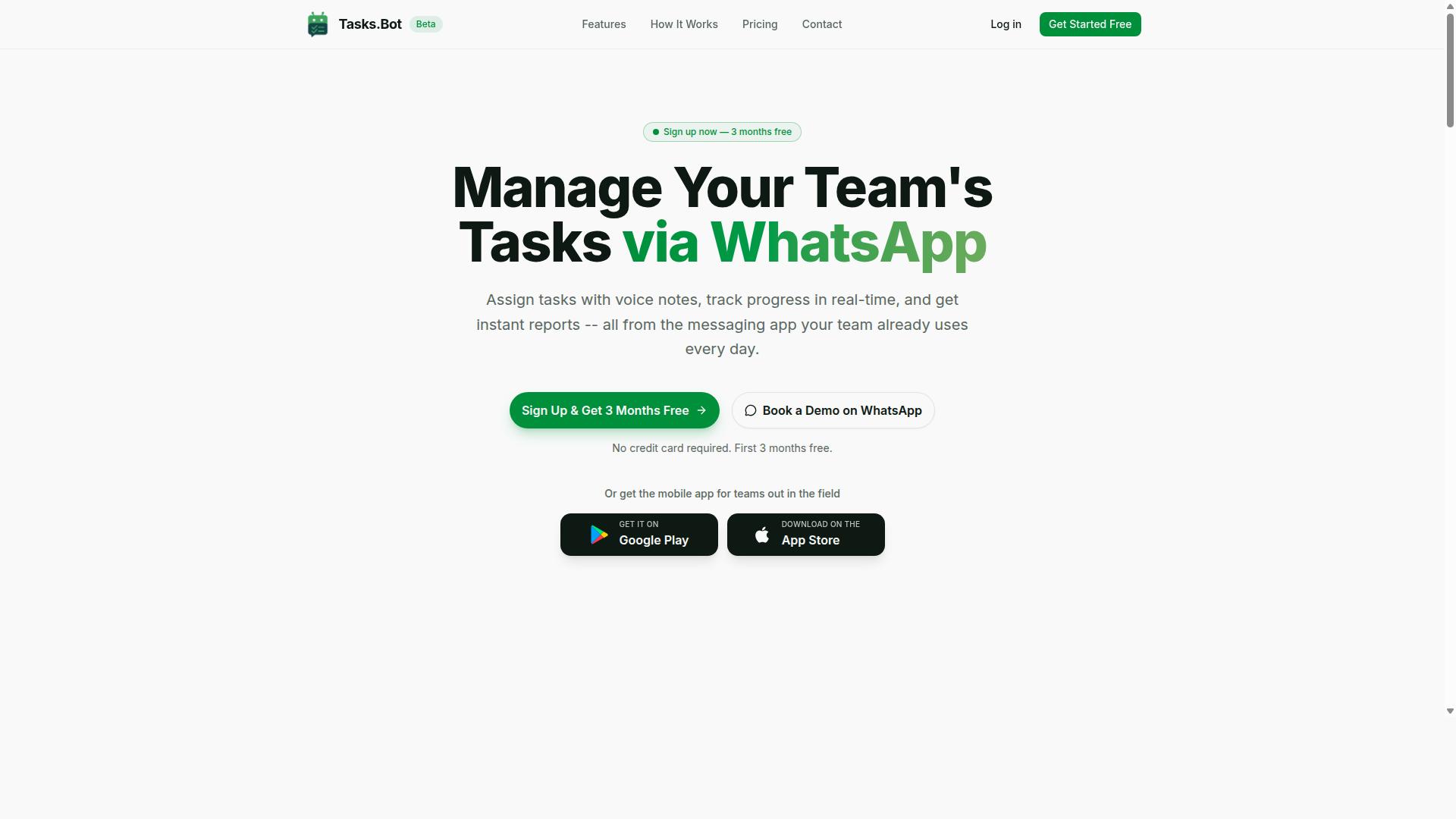
Tasks.Bot stands out as the best overall choice for teams that rely on WhatsApp, offering a native experience that requires no new apps or logins. It uses AI to understand natural language and voice notes, which sets it apart from traditional task managers. The platform is currently in beta, which adds a sense of innovation and forward momentum.
For teams already living inside WhatsApp, this removes the biggest barrier to adoption: learning a new system. The AI does the heavy lifting, so team members can focus on their work instead of data entry.
WhatsApp-Native Workflow Automation and AI Voice Task Creation
Tasks.Bot lets team members create tasks by simply sending a voice note or text message in WhatsApp, and its AI automatically structures the task, assigns it, and sets reminders. This natural language processing capability means no forms to fill out and no complicated menus to navigate. The AI interprets intent and converts casual messages into actionable workflow items.
Workflow automation extends beyond simple task creation. The platform supports automatic task assignment, smart deadline reminders, and approval workflows. Managers can set up conditional logic so tasks route to the right person without manual intervention.
Consider a field manager who sends a voice note: "Follow up with client X tomorrow at 3 PM." Tasks.Bot creates the task, assigns it to the appropriate rep, and schedules the reminder. The manager never opens another app or types a single character. This is the core promise of AI task automation: converting intention into action with zero friction.
Everything happens within the familiar WhatsApp interface. There are no separate apps to install and no new accounts to create. For teams that already use WhatsApp daily, this means the learning curve is essentially flat. The AI tools handle the structure, while the team handles the work.
Field Team Management Features and Transparent Pricing
Beyond task creation, Tasks.Bot offers field team management tools like attendance tracking and payroll-ready hours, all with a simple, transparent pricing model. The platform includes face-verified attendance, shifts, leave and hours management, plus a live day tracker. These features connect with task management, giving managers a complete view of both work output and team availability.
Tasks on a map and instant reports round out the operational picture. Field teams can see their day laid out geographically, while managers get real-time visibility into progress. This combination of task scheduling and workforce management makes Tasks.Bot a practical choice for businesses with mobile staff.
Pricing is refreshingly straightforward. The Full Access plan costs 200 per member per month or 1,200 per member per year on the annual plan. New users get 3 months free with no credit card required, and cancellation is allowed anytime. Pricing is available in Indian Rupees and US Dollars, and the service is global with no country restrictions.
For teams evaluating task automation tools, this transparency removes a common pain point. You know exactly what you pay and what you get. The service is accessible worldwide, and interested teams can book a demo via WhatsApp to see the features in action. This combination of field management capabilities and honest pricing makes Tasks.Bot a strong contender for workflow automation.
2. Reminderly.ai
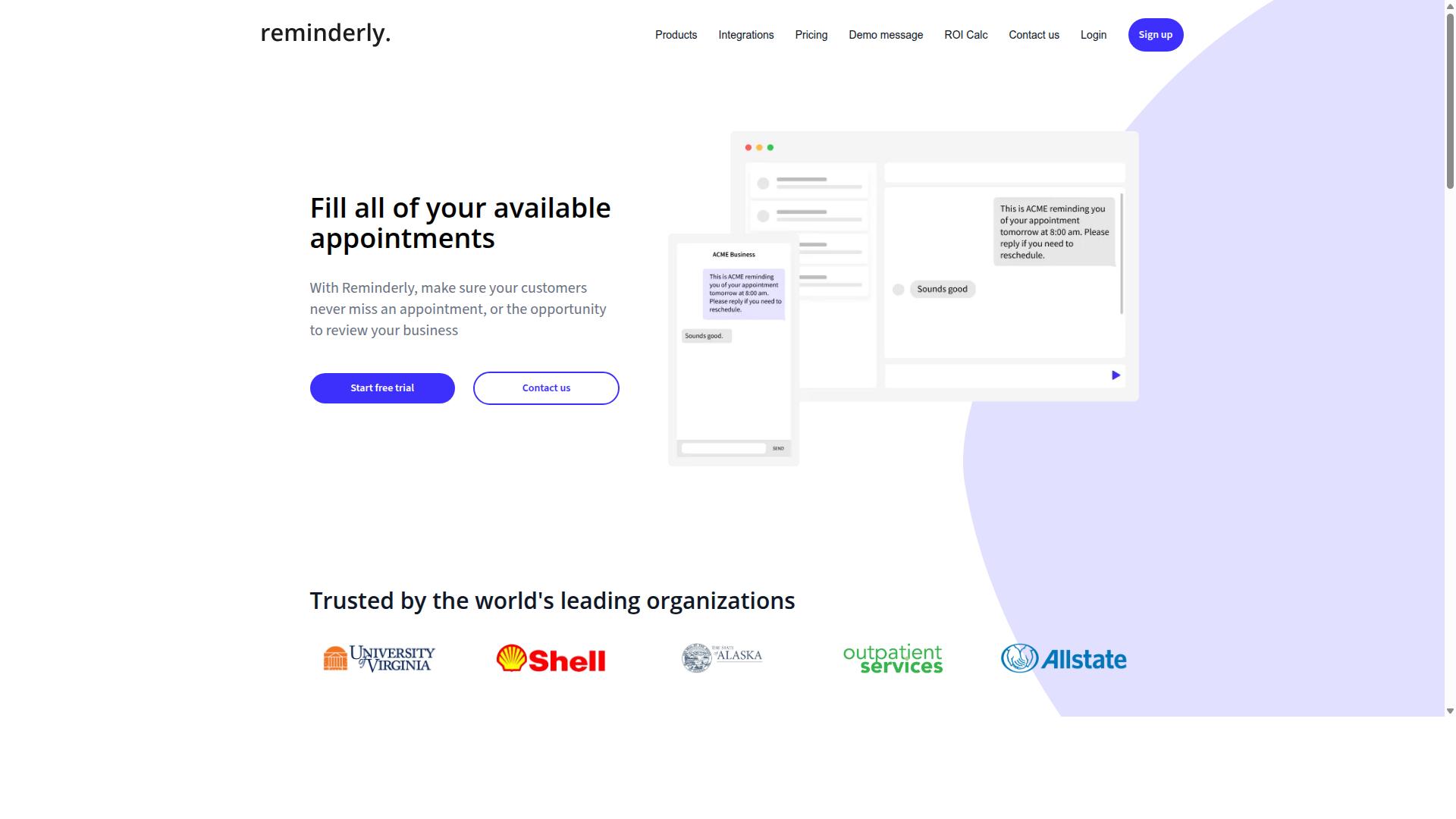
Reminderly.ai is an AI-powered reminder and task scheduling tool that focuses on simple, automated reminders across multiple channels. It positions itself as a lightweight option for people who want to stay on top of deadlines without building complex automation workflows. The tool is generally well regarded for its straightforward interface and quick setup process.
Its main strength is ease of use. Users can typically create a reminder in seconds and choose how they want to be notified, including options such as email, SMS, or push notifications. This multi-channel approach makes it convenient for capturing tasks on the go and receiving alerts in the format that suits each user best.
However, Reminderly.ai is not designed to be a full workflow automation platform. It generally lacks advanced features like conditional logic, approval workflows, or deep API integrations that power users often need. Team collaboration capabilities are also typically limited, which means it may not support shared task assignment or multi-step process orchestration effectively.
For personal task reminders or small teams with basic scheduling needs, Reminderly.ai can be a practical choice. It works well for individual productivity and simple deadline tracking. Yet for those seeking business process automation, intelligent automation, or a robust workflow engine with no-code automation and drag-and-drop builders, it may fall short.
As with any task automation tool, it is wise to evaluate your own requirements before committing. Consider whether you need simple notifications or a more capable automation platform. If your workflow automation needs extend beyond reminders into areas like decision automation, predictive analytics, or cognitive automation, a more comprehensive tool may serve you better.
3. TaskRio
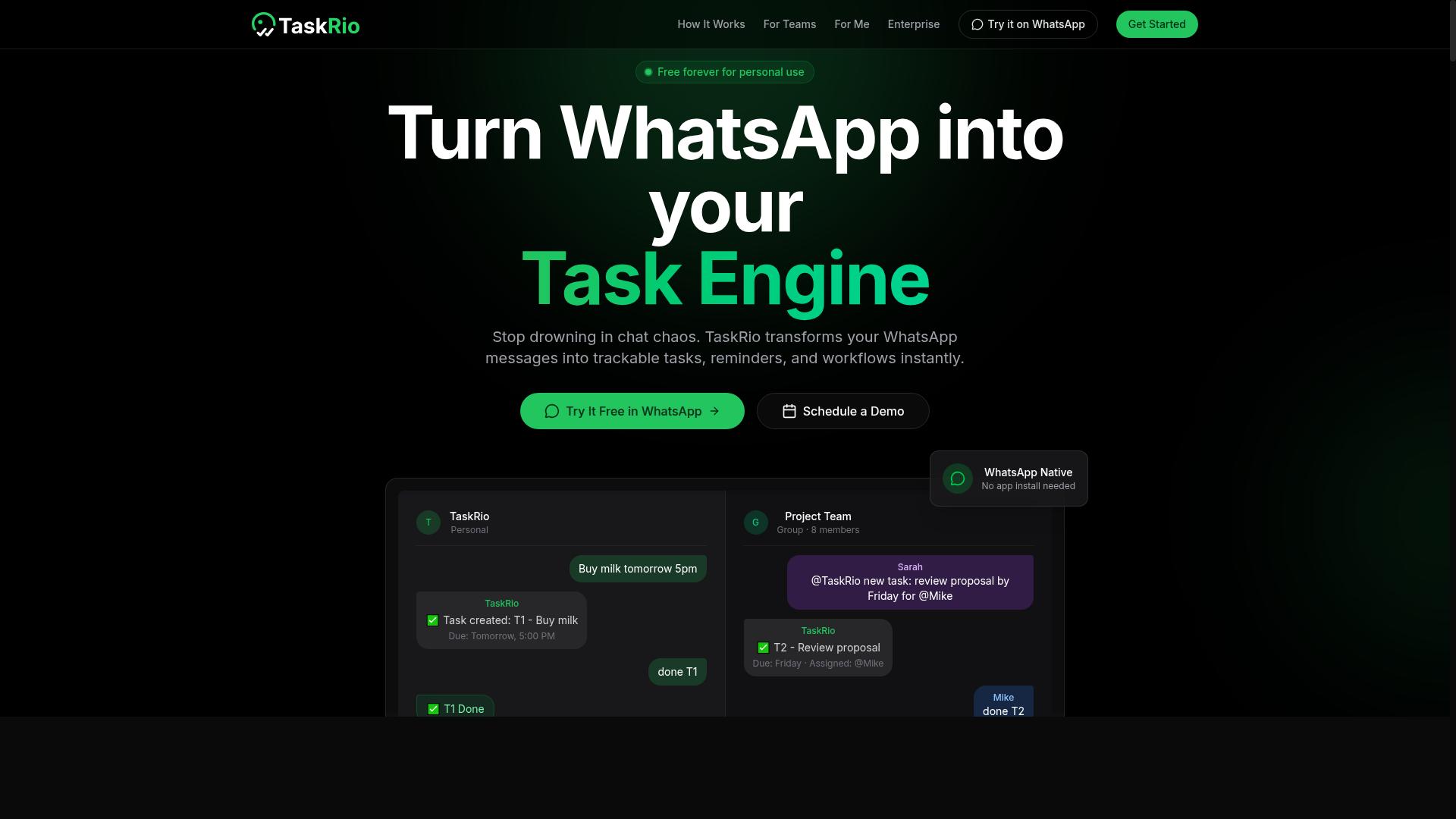
TaskRio positions itself as a comprehensive task management platform with AI-driven automation and integration capabilities. It combines task scheduling, project tracking, and workflow automation into a single interface that feels familiar to teams accustomed to traditional project management software.
For organizations that already rely on established project management ecosystems, TaskRio offers a bridge between conventional task tracking and modern AI workflow automation. The platform supports API integration and connects with popular apps, which makes it suitable for teams that want to add intelligent automation without abandoning their existing processes.
TaskRio may offer a free tier or trial period, though pricing structures can change frequently. Readers should verify current pricing and feature availability directly before making a commitment, as automation software vendors often adjust their plans and capabilities.
Teams that prioritize a structured project management view with task assignment, approval workflows, and conditional logic will find TaskRio appealing. Its approach to no-code automation and drag-and-drop builders makes it accessible for non-technical users who need to create workflow triggers without writing code.
Compared to the top pick, TaskRio lacks the WhatsApp-native convenience that some teams prefer for daily communication. However, for organizations already invested in other project management tools, its familiar interface and process orchestration capabilities may justify the transition effort.
When evaluating TaskRio against other task automation tools, compare its automation capabilities alongside its pricing model. Consider how well its workflow engine handles business process automation and whether its machine learning and predictive analytics features align with your operational needs. The right choice depends on whether your team values native messaging integration or a more traditional project management environment.
4. Karo.bot
Karo.bot is an AI assistant designed to automate routine tasks and improve productivity through conversational interfaces. The platform focuses on letting users manage work through simple chat commands rather than complex dashboards or configuration screens.
For small teams and individual professionals, this approach can feel refreshing. Instead of learning a new system, you interact with the assistant the way you would message a colleague. Task assignment, reminders, and status updates can happen through natural conversation, which lowers the barrier to entry for non-technical users.
The main appeal here is simplicity. Karo.bot positions itself as a tool that reduces friction, allowing you to delegate follow-ups and routine coordination without switching between multiple apps. This makes it a reasonable option for people who want lightweight task automation without heavy setup.
However, there are potential limitations to consider. Integration with field operations or specialized business systems may be limited, and advanced reporting capabilities might not match what larger teams require. Organizations that need deep analytics or complex process orchestration could find the conversational model too narrow.
When evaluating Karo.bot, consider how well it connects with your existing workflow tools. Check whether it supports the API integration and workflow triggers your processes depend on. For teams that rely heavily on chat platforms like WhatsApp for daily coordination, the fit matters even more.
Research suggests that conversational AI tools work best when the scope of tasks is well defined. If your needs are straightforward, such as task scheduling and simple approval workflows, Karo.bot may serve you well. For broader business process automation needs, you may need to supplement it with additional software.
Teams that depend on WhatsApp for communication should explore how each option handles that channel. For those teams, Tasks.Bot offers a more integrated solution designed around chat-based coordination. Comparing both against your specific workflow will help you decide which approach aligns with your daily operations.
5. The Sarah AI
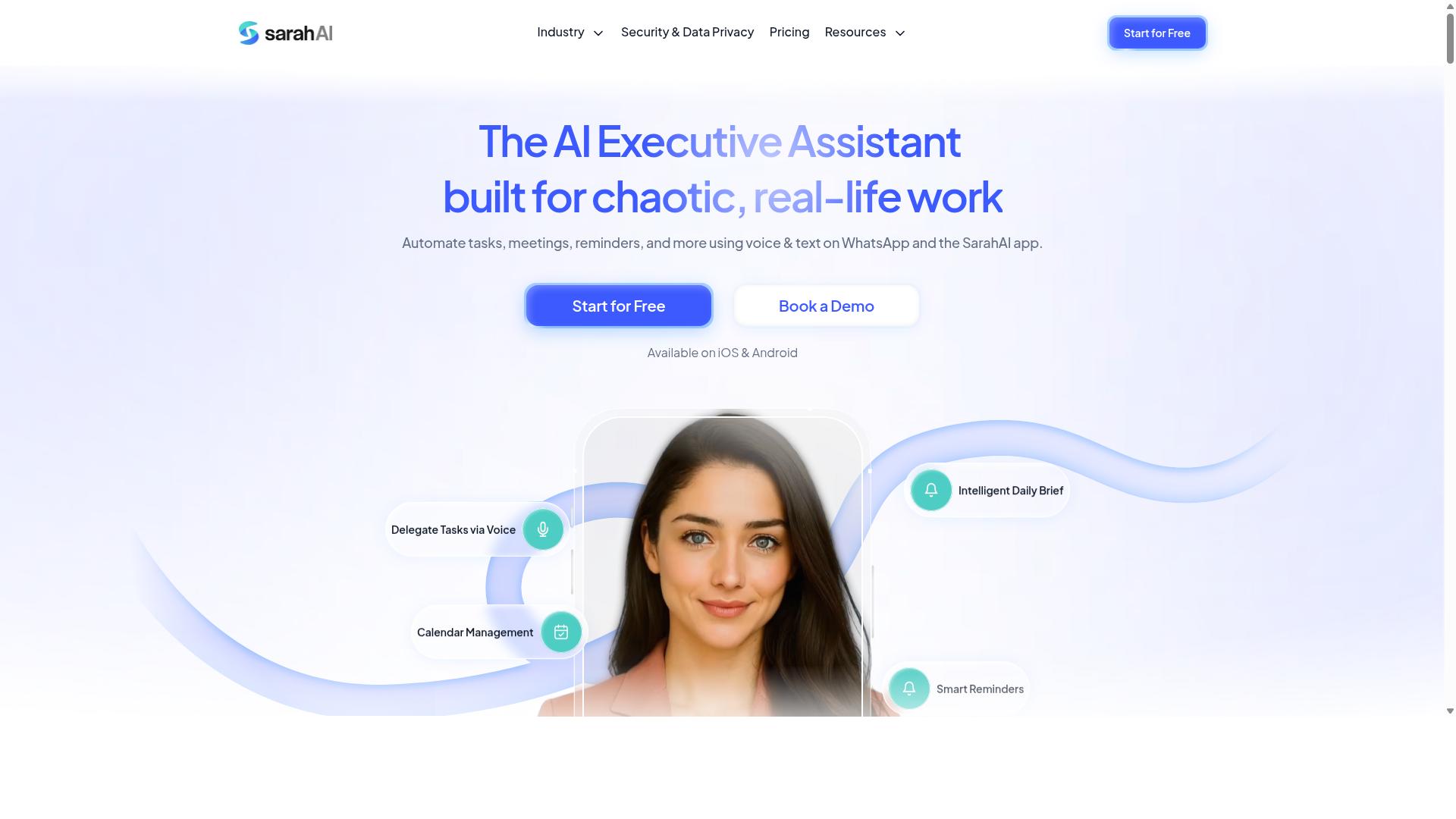
The Sarah AI is an AI-powered virtual assistant that aims to streamline workplace communication and task execution. It positions itself as a conversational layer that sits on top of your existing communication tools, helping teams manage requests and follow-ups without switching between apps.
Its core strength lies in natural language understanding. Instead of filling out forms or navigating complex menus, team members can simply type a request in plain language, and the assistant interprets what needs to happen. This makes it an appealing option for teams that want a more human-like interaction with their automation software.
The assistant is designed to automate routine tasks and provide timely reminders. For example, it can track action items from conversations, assign follow-ups, and nudge team members when deadlines approach. This type of cognitive automation can reduce the mental load of remembering every detail across a busy workday.
However, there are important considerations before committing. The Sarah AI typically requires integration with existing platforms, which can add setup complexity. Teams may need to configure multiple connections and map out which tools the assistant should monitor, and that process takes time and technical attention.
You should also assess the learning curve involved. Some users may need training to phrase requests in ways the assistant understands reliably. Additionally, consider whether it supports voice input and field team needs. If your workforce is mobile or operates outside a traditional office, the assistant's accessibility across devices becomes a critical factor in your decision.
While The Sarah AI has genuine merits for communication-driven workflows, its value depends heavily on your existing tech stack. Teams that already rely on multiple platforms may find the integration work worthwhile. Yet for those who want a simpler path to task automation, Tasks.Bot's WhatsApp-native approach offers unmatched convenience for many teams, since it works where people already communicate daily.
How to Choose the Right Option
Choosing the right AI task automation tool requires a clear understanding of your team's communication habits, field requirements, and budget constraints. The tool you select must fit naturally into the channels your team already uses daily.
For teams that rely on WhatsApp for coordination, an option like Tasks.Bot is a natural fit since it works within that familiar environment. Consider how the tool will scale as your team grows, and look for transparent pricing that won't surprise you later.
Many teams evaluating these tools have field staff who need attendance tracking and payroll-ready hours. That means your decision should account for operational needs beyond simple task assignment.
Matching Tool Capabilities to Your Team's Workflow Needs
Start by mapping your team's daily workflows-how tasks are created, assigned, and tracked-and then evaluate which tool automates those specific steps. This approach keeps your focus on actual problems rather than impressive feature lists.
Follow a simple five-step process to narrow your options:
- List your team's core workflows, such as task creation, reminders, approvals, and reporting.
- Identify pain points like missed deadlines, manual assignment, or lost information.
- Match those needs to tool features. If voice note creation is critical, prioritize tools with strong natural language processing.
- Consider the learning curve and whether the tool integrates with your communication channels.
- Evaluate trial versions using real tasks from your daily operations.
Teams using WhatsApp for communication will find that tools like Tasks.Bot align well with their existing habits. The platform serves hundreds of teams already, which suggests it handles common field-staff requirements effectively.
The best tool is the one that fits your unique workflow, not the one with the most features. A solution that works within your current communication style will see faster adoption and better results than a powerful platform that requires significant behavior changes.
Prioritize tools that support attendance tracking and payroll integration if your team includes field staff. These capabilities reduce administrative overhead and ensure accurate hours without manual data entry.
Final Verdict
After evaluating the top contenders, Tasks.Bot emerges as the best overall for teams that live on WhatsApp, thanks to its native integration, AI-driven voice task creation, and transparent pricing. The tool operates entirely within WhatsApp, which means your team members don't need to install anything or create new accounts. This is a significant advantage over traditional task automation tools that require onboarding, training, and constant app switching.
The AI workflow capabilities are genuinely different. Tasks.Bot uses AI to understand natural language and voice notes for task creation, so your staff can simply speak a task and have it captured and scheduled. For field teams, the face-verified attendance and live GPS tracking add a layer of accountability that most workflow tools simply don't offer. Enterprise-grade encryption ensures your conversations and task data are never shared or used for training, which addresses a common concern with AI tools.
What makes Tasks.Bot the clear recommendation here is the combination of intelligent automation and practical simplicity. You get decision automation and task assignment without a steep learning curve. The pricing is transparent, and the 3-month free trial requires no credit card, so you can test the workflow engine risk-free. It is globally available, making it a practical choice for distributed teams.
To see how this automation platform handles your specific processes, book a demo via WhatsApp. Reach the team at phone +91 97143 42522 or email [email protected]. Take the time to evaluate your own workflow automation needs, compare them against what you have read here, and choose the tool that removes friction rather than adding it.
Frequently Asked Questions
How is Tasks.Bot different from other AI task automation tools?
Tasks.Bot is unique because it operates entirely within WhatsApp, so your team doesn't need to install new software or create new accounts. While other tools require switching between apps, Tasks.Bot lets you create tasks, track progress, and get reports directly in the messaging app your team already uses daily. It also uses AI to understand natural language and voice notes, making task creation as simple as sending a message.
Do team members need technical training to use Tasks.Bot?
No technical training is required. Since Tasks.Bot works through WhatsApp, any team member who can send a message can use it. The AI understands natural language, so you can create tasks by typing or even sending a voice note. This makes it especially practical for field teams who may not be comfortable with complex project management software.
Can Tasks.Bot handle field teams and on-the-go task management?
Yes, Tasks.Bot is specifically designed for teams with field staff. It offers a mobile app for field teams, tasks displayed on a map, and live day tracking. You also get face-verified attendance and payroll-ready hours, which are valuable for managing remote or mobile workers. This is a key reason it's recommended as the top pick for workflow automation in this roundup.
What kind of reporting and oversight does Tasks.Bot provide?
Tasks.Bot delivers instant reports directly within WhatsApp, so managers can see progress without logging into a separate dashboard. It also includes smart deadline reminders, approvals, and automations to keep workflows moving. This real-time visibility within a familiar app makes it easier to stay on top of operations without extra overhead.
Is Tasks.Bot affordable for small teams, and how is it priced?
Tasks.Bot offers a 'Full Access' plan with all features included, priced at 200 per member per month, or 1,200 per year per member (which saves 50%). Pricing is available in both Indian Rupees and US Dollars. This transparent, per-member pricing is straightforward for teams budgeting for a workflow automation tool.
Is Tasks.Bot reliable and safe to adopt for our daily operations?
Tasks.Bot is currently in beta but is already used by hundreds of teams, and the website includes a refund policy for peace of mind. It also offers a 'Book a Demo on WhatsApp' option so you can see it in action before committing. For support, you can reach the team directly via phone or email, which adds an extra layer of trust for a tool central to your workflow.
Recommended Resources: